How Does Operator Ergonomics Affect Performance in Life Sciences Manufacturing?

Operator ergonomics directly affects performance in life sciences manufacturing by influencing attention, documentation accuracy, and sustained decision-making quality across a shift. Industry sources report that human error accounts for 50-80% of quality incidents in pharmaceutical manufacturing (BioPhorum, 2023; Dr Ginette Collazo, Human Error Solutions). Research published in Scientific Reports (2024) found that occupational fatigue from sustained awkward posture impairs concentration, short-term memory, and decision-making. Mobile, height-adjustable workstations that bring digital systems to the operator reduce the physical compromise that contributes to these errors.
Walk into most pharmaceutical or biotech facilities and you will find operators who have adapted. Adapted to terminals positioned at heights that require a slight forward bend, to screens angled in ways that demand a sideways glance while monitoring a process, and to workstations installed at a point in the project when most of the engineering decisions had already been locked. This adaptation has become so common that it has also become invisible.
That invisibility is the problem. The cumulative physical cost of working in a poorly configured environment does not stay confined to discomfort. It moves into attention, response time, and the quality of documentation being entered at the end of a four-hour shift. And when the next deviation occurs, the investigation will almost certainly not trace the contributing factor back to workstation height or screen angle. It will just record the operator error, which is accurate but incomplete.
Ergonomics in life sciences manufacturing is consistently treated as a late-stage consideration: a health and safety item, a retrofit after the fit-out is complete, or a welfare initiative addressed separately from process design. But the deviation data suggest that framing is wrong.
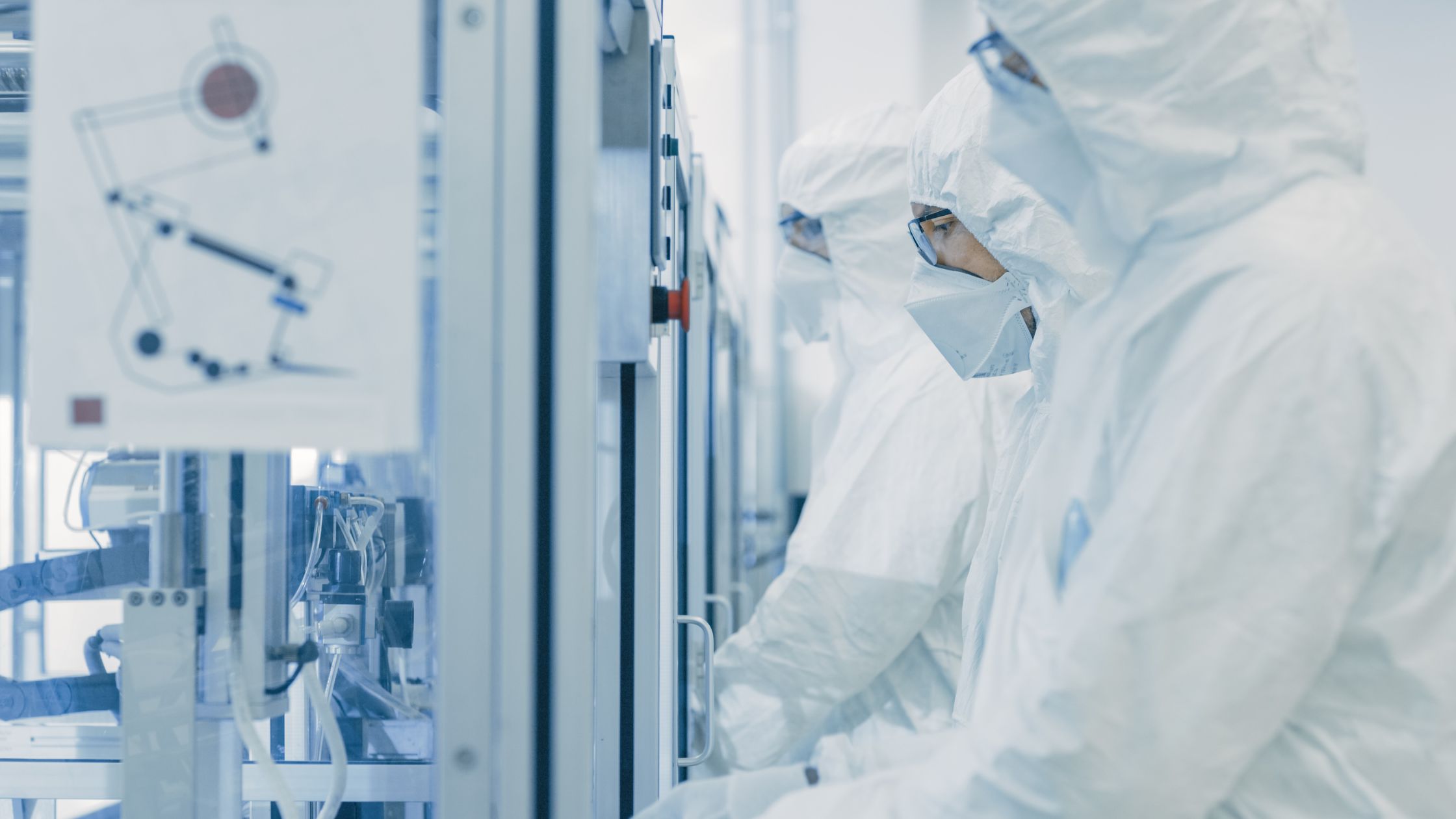
Physical Environment Contribution to Human Error
Across the pharmaceutical and biotech sector, human error is consistently cited as a leading contributor to quality incidents and deviations in GMP-regulated manufacturing. Dr Ginette Collazo, CEO of Human Error Solutions, reports that up to 80% of process deviations in pharmaceutical manufacturing environments can be attributed to human error (World Pharma Today, 2022; MasterControl GxP Lifeline, 2020). A 2024 paper published in ResearchGate ('The Surging Relevance of Human Error in Pharmaceutical Manufacturing Sectors') places the figure at approximately 50% of quality incidents, while BioProcess International notes that human error is usually the outcome of deficiencies in documented instructions, training, equipment design, and ergonomics.
That finding reflects something most experienced quality leads already understand: operator error is where a failure lands, not where it starts.
Physical discomfort and sustained awkward posture create a cognitive load that runs in parallel to the task itself. Research published in Scientific Reports (2024) found that occupational fatigue directly impairs attention, concentration, short-term memory, and decision-making. Separately, a study published in PNAS Nexus documented a weekly fatigue prevalence of 57.9% among manufacturing workers, with fatigued workers reporting health-related lost productive time at more than twice the rate of those without fatigue.
The conditions that produce that fatigue in cleanroom and fill-finish environments are not unusual: fixed-height workstations that do not accommodate the range of operators using them, terminals positioned away from the point of work, and documentation surfaces that require postural compromise to use. These are standard features of facilities where ergonomics was addressed after the equipment decisions were already made.
Where Ergonomic Design Affects Performance
When an operator enters an incorrect parameter value four hours into a standing position at a fixed terminal set at the wrong height, the investigation will record the error and review the SOP and training record. What it will typically not do is examine whether the physical working conditions at that workstation systematically increase error probability, and whether, across dozens of operators and hundreds of shifts, that particular terminal is generating more discrepancies than the others.
ISO 6385:2016, which sets ergonomics principles for the design of work systems, establishes that adequate posture, work height, normal and maximum working areas, and visual requirements must be specified for the intended user population. When they are not, the resulting mismatch between the work system and the operator creates conditions where sustained physical effort is required simply to perform the task, which in turn depletes the cognitive resources required for accurate, compliant documentation.
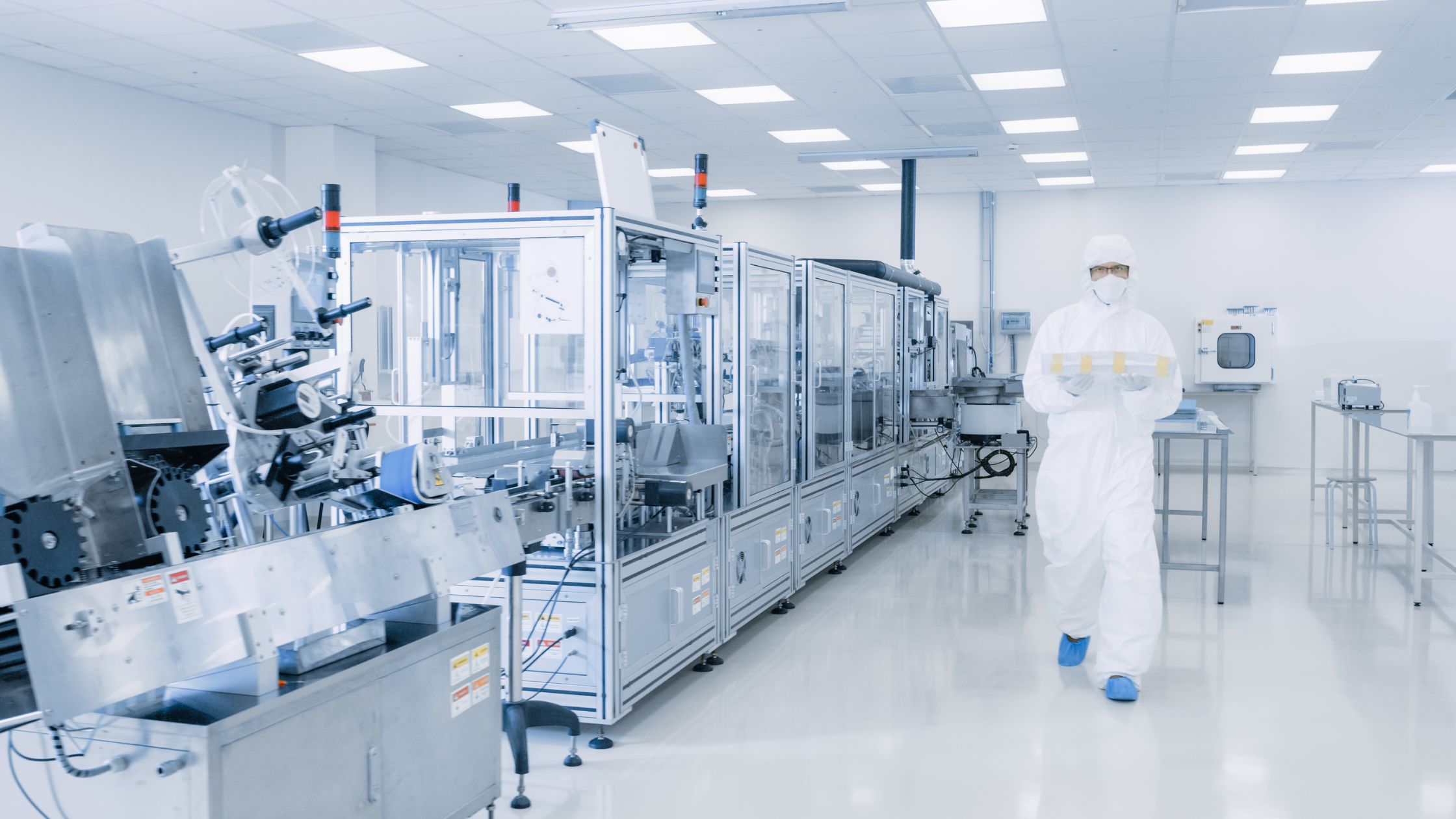
What It Looks Like on the Floor
Consider two scenarios in the same packaging environment:
In the first, the MES terminal is mounted at a fixed point several metres from the line. Operators walk to it to log parameters, returning to the process each time. During busy periods, some entries are deferred and completed from memory. The terminal height was set during installation and has not been adjusted to the range of operators working that line.
In the second, the workstation is mobile and height-adjustable, positioned at the operator's side and moved to the point of work. Entries are made in real time, standing upright, with the process visible.
Kinetic-ID's ID-Flow 5 and ID-Flow 6 are built around this principle: mobile, height-adjustable workstations for Grade C/D and Grade B/C environments that bring digital systems including MES, EBR, and automation / SCADA access to the operator rather than requiring operators to come to it.
The Infrastructure Layer That Reduces Risk Is Physical, Not Just Digital
There is a version of the deviation reduction conversation that focuses entirely on software: better digital / MES configuration, tighter automation controls, improved automation / SCADA alerting. Those matter, but the operator is the interface between the system and the process, and the physical conditions under which that interface operates determine how reliably it functions across a full shift.
Ergonomics is not a welfare supplement to the operations programme. It is a design variable that influences accuracy, documentation quality, and sustained attention, all of which are performance outcomes. Treating it as a late-stage consideration, or a retrofit after the fit-out is signed off, is accepting preventable risk as a fixed cost of the facility.
Frequently Asked Questions
If the Workstations on Your Floor Were Not Designed Around the Operator
The ID-Flow range of mobile, height-adjustable workstations for Grade B, C, and D environments brings digital systems, including MES, EBR, and automation / SCADA access to the point of work, at the right height, for the operator using it. If you are specifying new infrastructure or reviewing what is already on the floor, our solutions team can walk you through the options.
Speak with a solutions consultant
References
1. BioPhorum / PDA Journal of Pharmaceutical Science and Technology (2023). Human Performance in Pharmaceutical Manufacturing. https://www.biophorum.com/download/pda-journal-human-performance/
2. Dr Ginette Collazo, CEO, Human Error Solutions (2020, 2022). Cited in MasterControl GxP Lifeline ('Reducing Deviations and Human Error on the Manufacturing Floor', 2020) and World Pharma Today ('Avoiding Human Error in Pharmaceutical Manufacturing', 2022). 80% of process deviations attributed to human error.
3. ResearchGate (2024). 'The Surging Relevance of Human Error in Pharmaceutical Manufacturing Sectors.' Approximately 50% of quality incidents attributed to human error; Lonza case study showing 40% reduction in human error-related deviations across 13 sites.
4. BioProcess International. 'Is Human Error the Cause or the Outcome of GMP Deviations?' Human error as outcome of deficiencies in instructions, training, equipment design, and ergonomics. https://www.bioprocessonline.com/
5. Scientific Reports (2024). Occupational fatigue and cognitive impairment: attention, concentration, short-term memory, and decision-making. https://www.nature.com/articles/s41598-024-68889-4
6. PNAS Nexus. Weekly fatigue prevalence of 57.9% among manufacturing workers; fatigued workers reporting health-related lost productive time at 2x the rate of non-fatigued workers.
7. ISO 6385:2016. Ergonomics principles for the design of work systems.
8. Information Mapping. 'Need to Correct cGMP Deviations? Look Beyond Human Error.' Up to 80% of pharmaceutical cGMP deviations attributed to human error. https://informationmapping.com/
SEE HOW TEAMS STAY IN CONTROL
Learn how Life Sciences operators use mobile and fixed HMIs to stay compliant, reduce re-entry steps, and improve workflow accuracy.
Download the brochure