
Shared Equipment in GMP Environments: Risk, Accountability, and Compliance

In most GMP facilities, the equipment that moves the most is the equipment that gets thought about the least. Shared equipment sits below the surface of a facility's risk register until something forces it up: a 483 finding, a cross-contamination event, or a shift in regulatory expectation. Once it surfaces, it becomes the single thread that ties together cleaning validation, batch documentation, equipment qualification, and quality oversight, and the gaps are hard to close after the fact.
For QA and operations leaders, shared equipment is rarely one problem. It is a set of connected ones: a contamination problem, a question of whether it is even the correct approved equipment for the batch, an accountability problem, and an audit-exposure problem. ICH Q9(R1) now expects risk-based decision-making to be applied consistently to multi-product, non-dedicated, and shared equipment, so each of these sits inside a documented framework that inspectors from the FDA, EMA, and MHRA are looking at more closely than they were five years ago.
Shared Equipment Is a Control Problem
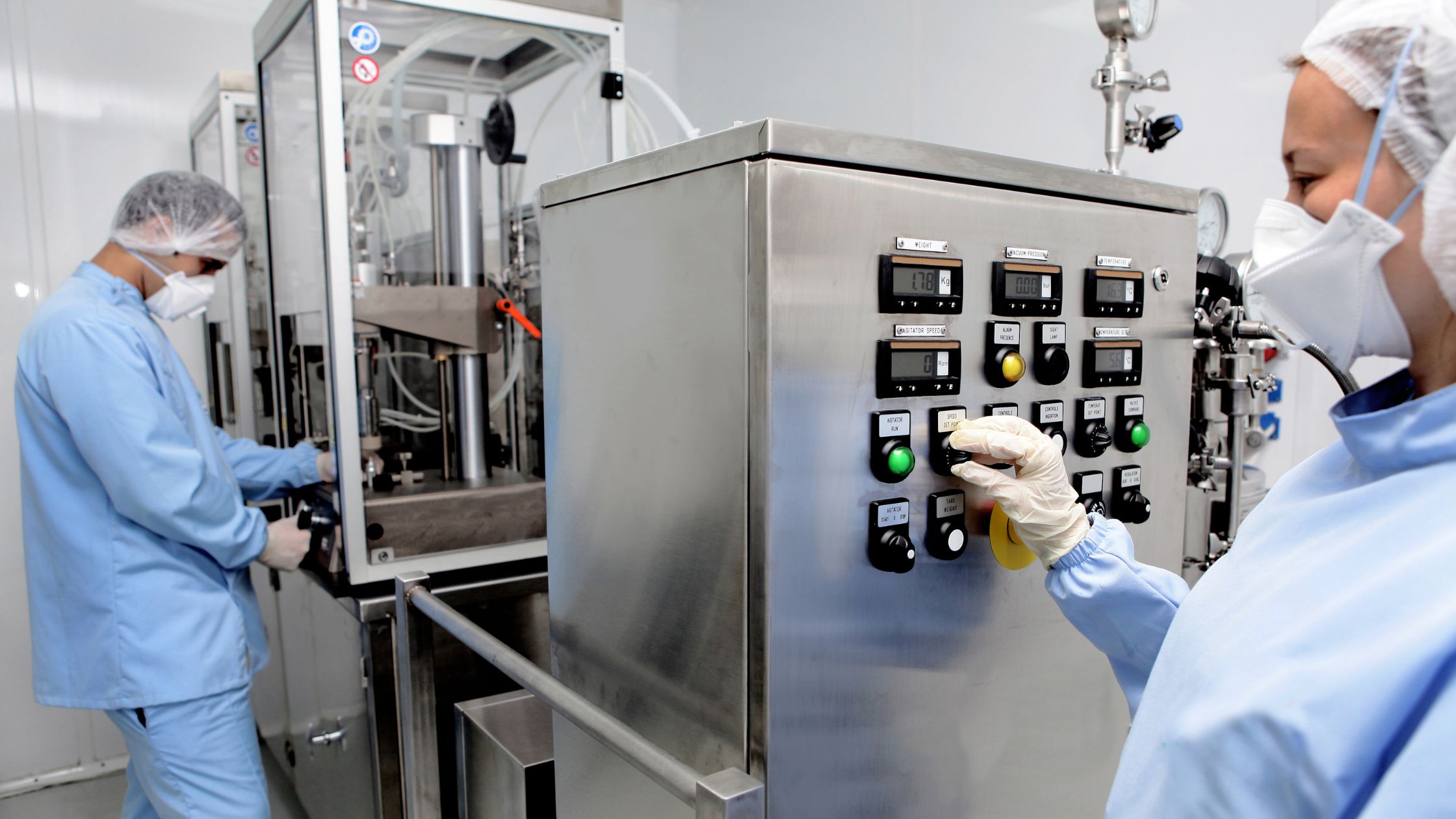
Shared equipment is a governance category, not a maintenance detail. The expectation now is documented control, applied formally and refreshed as the facility changes.
A walk through most pharma and biotech sites tells the same story. The equipment movement schedule lives in spreadsheets. The cleaning records for that same equipment live in batch records or in equipment log books, often in a different system. The use history sits with whichever operators handled the item most recently, retrievable through tribal knowledge or a paper trail that takes time to assemble. And the risk assessment, where one exists, was written when the equipment was first qualified and has not been revisited since.
None of these are a crisis on their own. They are a crisis together, since inspectors now treat shared equipment as a thread that runs through the whole quality system, and they expect manufacturers to follow it end to end on demand.
The shift in expectation has been building for over a decade. The EMA's Health-Based Exposure Limits guideline (effective June 2015) forced manufacturers to derive cleaning validation acceptance criteria from toxicological data rather than visual cleanliness. The revised EU GMP Annex 1 (fully effective August 2023) introduced the Contamination Control Strategy, an overarching document that links facility design, equipment, utilities, procedures, personnel, and monitoring, and names shared and non-dedicated equipment directly. The revised ICH Q9(R1) on Quality Risk Management (adopted January 2023) requires risk-based decision-making to be applied consistently, including to multi-product and shared equipment. FDA enforcement has followed in step, with cleaning validation observations for non-dedicated equipment now appearing routinely in 483s and warning letters.
The pattern is clear: shared equipment is a control category, and the expectation is documented governance.
The Contamination and Wrong-Equipment Risk in 2026
Contamination is the obvious risk and the most heavily codified one. Sitting right beside it is a quieter one: whether the equipment in front of the operator is the correct, qualified, cleaned equipment for that product and that batch.
For shared equipment, contamination is the risk every framework already covers. The expectation now is that those frameworks are applied formally and revisited as the facility evolves. Running alongside it is the use of non-dedicated or incorrect equipment. Reaching for a vessel that was never qualified for this product, or one that was qualified but is the wrong size or configuration for the batch, is its own quality risk, and a common route into cross-contamination.
Take a multi-product line. If you are running a campaign of product B and you bring it to a 200-litre bioreactor, is that the right reactor for this product, or should the batch run in a 100-litre vessel, or one with perfusion? Choosing the wrong qualified asset is a risk-based decision that ICH Q9(R1) expects to be controlled, not left to whoever is on shift.
Cross-contamination on shared equipment shows up in a few characteristic patterns:
- Chemical or biological carry-over from a previous product, where residual API or active ingredient is detectable on equipment surfaces and transfers into the next batch.
- Microbial contamination, where surfaces or internals retain a bioburden that survives the cleaning cycle.
- Contamination through shared utilities or shared sampling tools, where the equipment itself is clean but the access points are not.
- Procedures not followed alongside use of incorrect or non-dedicated equipment, where skipping the correct cleaning or verification step and reaching for the wrong asset combine into a cross-contamination event that the records do not catch.
This is where a connected workstation earns its place on the floor. When an operator scans a piece of equipment at the point of work, the system can flag an exception in real time: wrong equipment for this batch, not yet cleaned, or cleaned three days ago by a named operator and ready to run. The check happens before the batch does, not in an investigation afterward.
Since 2015, manufacturers in shared facilities have been expected to derive cleaning acceptance criteria from health-based exposure limits, not from visual cleanliness or generic 10-ppm assumptions. The EMA guideline set Permitted Daily Exposure (PDE) values as the basis for maximum allowable carry-over, calculated using ICH Q3C(R4) methodology. ICH Q9(R1) reinforced the expectation that the risk assessment behind those limits is formal, documented, and reviewed when conditions change, including when product mix, equipment, or facility layout shift.
FDA enforcement reflects the same expectation. In 2024, equipment cleaning under 21 CFR 211.67 stayed among the most-cited observation areas for finished pharmaceutical manufacturers. Analysis of that year's sterile-site observations found seven CFR sections, equipment cleaning among them, made up close to 70% of the observations issued. The December 2024 FDA warning letter to Micro Orgo Chem is a direct example: the firm had not validated cleaning for its non-dedicated equipment, and committed to recall all affected product from the U.S. market. An August 2024 warning letter to Orean Personal Care made the same point: inadequate residue removal from non-dedicated equipment can contaminate the next product made on it.
The pattern across recent enforcement is consistent. Inspectors are not looking for the absence of cleaning records. They are looking for whether the cleaning approach is justified by current toxicological data, applied to every shared item, and documented in a way that supports the broader Contamination Control Strategy.
The Accountability Gap: Who Owns Shared Equipment Between Uses?
When equipment is dedicated to a product or a line, ownership is structural. When it is shared, ownership becomes a process, and processes fail quietly.
Accountability surfaces less often in compliance literature, but it causes the most operational pain on the floor. The accountability gap shows up in characteristic ways:
- Cleaning logs that diverge from batch records because two operators each assumed the other owned the entry.
- Equipment logbooks where the most recent line is a calibration two months ago, with no record of the eleven uses in between.
- Movement spreadsheets that place equipment in one suite while the operator who last used it remembers leaving it in another.
- A change in product campaign that no one tied back to a re-verification of cleaning status.
These are the routine states of a facility that runs shared equipment without a defined ownership model. Under the current regulatory environment, they turn into 483 findings the moment an inspector follows one piece of equipment across multiple batches.
The accountability model that holds up treats ownership as a series of named, defined handoffs rather than a default state. Each transition between users, products, or campaigns is a documented event captured in a single source of truth that connects equipment status, cleaning verification, and use history.
In practice, this is hard, since the data is fragmented. Cleaning records sit in one system, equipment logs in another, batch records in a third, and the movement schedule in a fourth. Without an integrated view, the chain is structurally hard to follow, both for the people who own it and for the inspector who has only a short window on site. This is the same factory floor visibility problem that drives deviation rates, applied to equipment governance.
The Audit Exposure: What Inspectors Are Looking For
Shared equipment generates findings in a small set of repeating areas. Three connections come up again and again.
For a QA lead, audit exposure is what sets budget priorities and corrective action plans. The pattern in recent FDA, EMA, and MHRA inspections points to three recurring questions.
- The cleaning-validation-to-cleaning-execution gap. Inspectors increasingly ask not just for the cleaning validation study, but for evidence that day-to-day cleaning matches the validated procedure across every operator, every shift, and every product changeover.
- The equipment-history-to-product-history connection. Inspectors trace forward and backward: from a product, through the batch record, to every piece of shared equipment used in its manufacture, and from that equipment through every other batch it touched in the relevant timeframe. Gaps in use history, or inconsistencies between equipment logs and batch records, are findings in themselves, whether or not contamination occurred.
- The risk-assessment-to-current-state connection. ICH Q9(R1) and EU GMP Annex 1 both expect risk assessments around shared equipment to reflect current operating conditions, not the conditions at original qualification. An assessment written when the facility ran one product line, and left untouched after two more were added, will not survive scrutiny.
On that last point, inspectors want evidence that assessments are reviewed at set intervals and after defined triggers: a new product introduction, a new product batch on an existing line, new equipment, a new facility area, or a deviation that suggests existing controls are insufficient. This is also where audit readiness stops being a paperwork exercise and becomes a data architecture question.
Shared Equipment Is Broader Than Most Risk Registers Treat It As
The structural assets get the attention. The mobile, distributed layer is where 483 findings start.
When QA teams build a shared-equipment risk register, the listed items are usually the obvious ones: multi-product reactors, shared filling lines, dedicated suites that occasionally host a secondary product. These structural assets get the analytical attention they deserve.
The less obvious category, and the one increasingly driving 483 findings, is the mobile, distributed equipment that moves between products, suites, shifts, and plant locations without entering the formal register at all:
- Balances
- Sampling tools
- Cleaning carts
- Mobile IBCs
- Sampling probes for environmental monitoring
- Mobile workstations operators use to reach MES, automation, IT, and quality systems across the facility
Each of these touches multiple products in any given week. For every item in this category, the same questions apply: how is it cleaned between uses, how is its movement tracked, and how is its use history tied back to the product batch records it supports?
The questions are no different because the equipment is mobile, and the documentation bar is no lower because the equipment is small. Mobile equipment is just rarely on the master equipment list, which means it is rarely on the inspection-readiness checklist, and that is where audit findings start. The same principles that drive cleanroom suitability for GMP-compliant carts and workstations apply to every shared, mobile asset in a controlled environment.
What a Modern Shared-Equipment Programme Looks Like
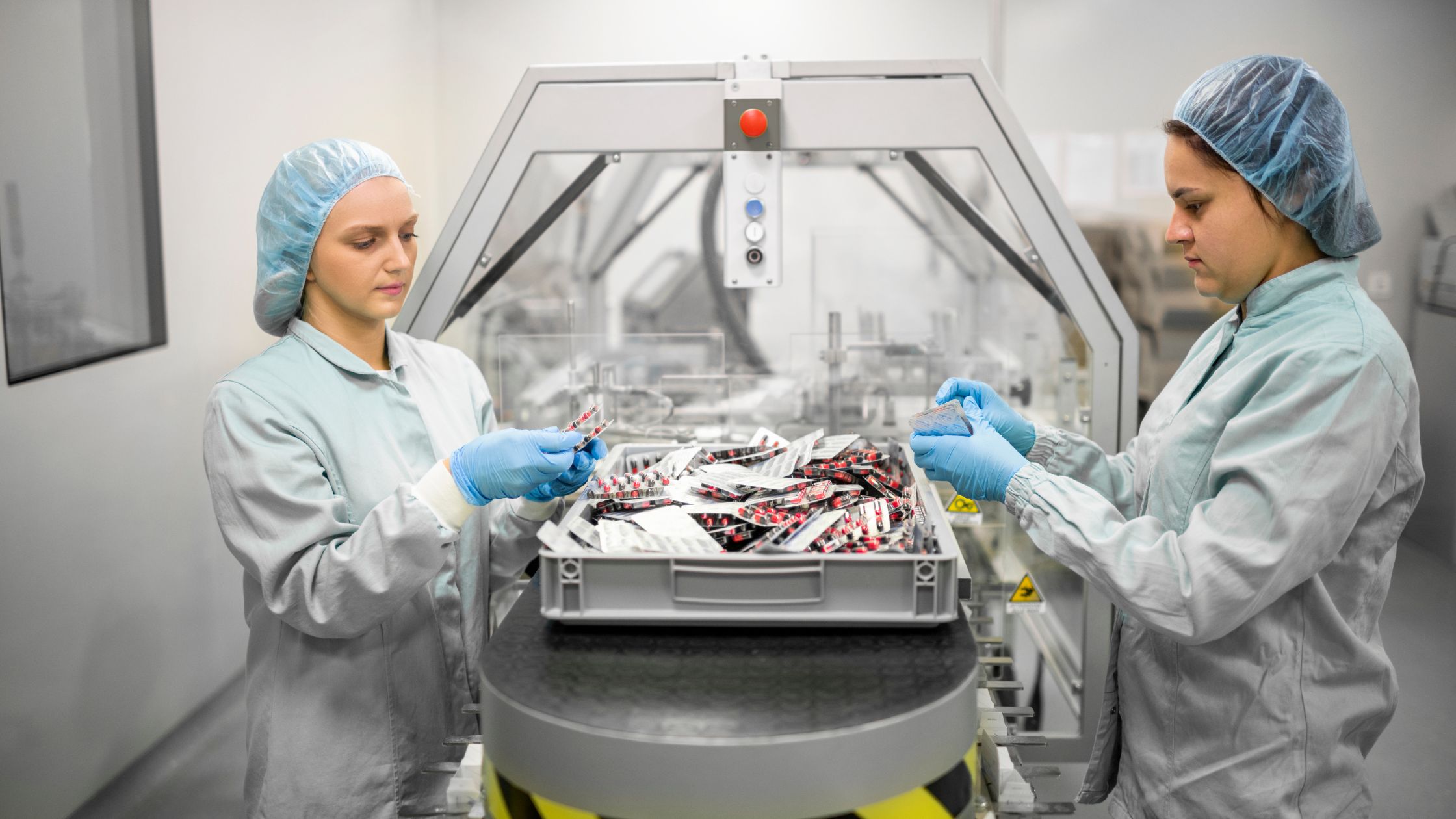
Facilities that handle shared equipment well share a small set of practices.
- Risk-based classification of every shared asset, refreshed at set intervals: Each piece of shared equipment is categorised by contamination risk, criticality, and frequency of changeover. Mobile workstations, sampling tools, and cleaning equipment sit alongside the structural assets, not on a separate informal list.
- A single source of truth for equipment status, cleaning history, and use history: The data lives in one place and can be queried by equipment, product, operator, or date range. Mature MES, equipment management, and quality systems carry most of the load, and the integration gaps between them cause the most pain at audit time.
- Defined handoff points with documented accountability: Every transition between users, products, or campaigns is a discrete event with a named owner, a timestamped record, and a cleaning verification status. It is the chain-of-custody approach used in laboratory operations, applied to manufacturing.
- Risk assessments that move with the facility: The Contamination Control Strategy under EU GMP Annex 1 is treated as a living document, reviewed when product mix changes, when new equipment enters the shared pool, or when a deviation suggests existing controls fall short.
- Cleaning that connects to use, not to the calendar: Cleaning frequency and verification are driven by use intensity and risk profile, not by fixed intervals. This is what regulators mean by risk-based cleaning programmes, and what 483 observations increasingly cite when cleaning procedures do not match real-world equipment use. The same logic underpins how facilities approach deviation reduction more broadly: visibility, structure, and timing all need to be in place together.
Shared equipment is no longer a quiet category. Inspectors expect documented governance, not implicit ownership, and the facilities that fail are the ones that cannot tie cleaning, use history, and product impact together when asked.
Where the Mobile and Digital Layer Fits In
The shared-equipment question now extends to the digital infrastructure operators use to do the work: the workstations, kiosks, and access points that connect them to MES, automation, IT, and quality systems.
For ops and IT teams, these access points are shared by definition. They support multiple operators, multiple products, and multiple shifts, and the same governance principles apply. A workstation strategy inside a GMP zone is, in practice, a shared-equipment strategy. Naming it as MES alone undersells the point: many manufacturers, medical device makers among them, run little or no electronic batch record yet still carry real shared-equipment and contamination risk. The right frame is the digital infrastructure layer as a whole.
The connection to data integrity is direct. An operator signing off a batch step or recording a deviation through a shared workstation creates a record tied to that transaction. If the workstation is not tracked in the equipment programme, the provenance of that record is incomplete. Which device, in what cleaning state, accessed from which room: the integrity of what gets recorded depends on the infrastructure layer being governed to the same standard as the production equipment it supports.
Workstation design decisions ripple straight into compliance. Kinetic-ID's cleanroom-grade builds, like the ID-Flow 6 and the ID-Flow 9, are built on this principle: shared infrastructure inside a GMP zone is subject to the same control expectations as the production equipment itself, and the workstation belongs in the validated chain.
The same logic applies to fixed access points. The ID-View fixed HMI is wall-mounted, but in many facilities it is shared by every operator working in the room, and the cleanroom construction, in-room maintainability, and IT integration are designed for that reality. Where each approach fits is a separate question, one the fixed versus mobile workstation comparison works through. Either way, a unit that is cleanroom-grade by design still depends on the right cleaning behaviour and procedures in daily use. Shared does not have to mean unmanaged. It means managed by design and by operation.
Shared Equipment Is Not Going Away
As facilities run more products through tighter capital footprints, the share of equipment that is dedicated keeps shrinking. The open question is whether the systems around it are mature enough to support what regulators now expect.
Facilities that handle this well treat shared equipment as a control category in its own right. They classify, document, and govern every shared asset, from mobile to fixed, digital to mechanical, structural to distributed, with the same discipline they apply to a multi-product reactor. They build the chain of custody and treat the shared-equipment programme as part of operational design.
If Your Mobile and Digital Layer Is Not in the Programme Yet
Kinetic-ID works with QA, ops, and digital teams to bring workstation strategy, cleaning expectations, and audit trail into alignment with the rest of the shared-equipment framework.
Speak with a solutions consultant
