
Making Epic Work in Every Space: How Kinetic-ID enabled a smooth rollout across the Royal National Orthopaedic Hospital NHS Trust
When the Royal National Orthopaedic Hospital NHS Trust rolled out Epic EHR, most departments simply needed more workstations — but the cramped theatre recovery bays had no room to spare. Rather than add equipment, Kinetic-ID designed a bespoke workstation that replaced an existing drawer unit within the same footprint, giving staff bedside access to patient records and more storage than before.

Implementing a new Electronic Health Record (EHR) system is never just about software. Success depends on ensuring clinicians have the right tools in the right place at the right time.
When the Royal National Orthopaedic Hospital NHS Trust embarked on its transition to Epic EHR, it quickly became clear that existing workstation provision would need to expand significantly. New workflows required more bedside access to patient records across wards, intensive care units, and theatre recovery areas.
For most departments, this simply meant deploying additional workstations on wheels (WOWs). In the theatre recovery areas, however, the challenge was far more complex.
The Challenge: More Digital Access, Less Available Space
The Trust had been using Kinetic-ID WOWs successfully for several years and reviewed alternative suppliers before deciding to continue the partnership.
Reliability was a major factor in this decision, along with practical design features such as Kinetic’s front-facing battery indicator, which allows staff to quickly see the remaining charge level without having to inspect the rear of the unit.
However, as planning progressed for the Epic rollout, staff from the theatre recovery areas raised concerns about introducing additional equipment into already crowded bays.
Unlike other parts of the hospital, some recovery areas had very limited space. Beds, monitoring equipment, and clinical staff all competed for room, leaving little capacity for standard workstation designs.
The Trust needed a solution that would provide bedside access to electronic patient records without disrupting established clinical workflows.
The Solution: Replace, Don’t Add
Each bay already housed a drawer unit stocked with the dressings and supplies staff needed throughout a shift. Working closely with departmental staff and the Trust’s ICT team, Kinetic-ID developed a bespoke WOW that replaced this existing drawer unit entirely. The new design matched the original footprint and mirrored the familiar drawer layout while incorporating everything needed for Epic. When the final version went into service, staff found it offered more storage than the unit it replaced, not less.
Kinetic-ID produced a prototype and installed it in the department for real-world testing before committing to production. Staff feedback led to several refinements, including changes to the drawer configuration. Kinetic-ID also put in extra time to ensure the unit met its own stability and safety standards before final production.
“Kinetic’s willingness to refine the solution and communicate openly throughout the process was particularly appreciated. The custom recovery WOW transformed what had initially appeared to be an unsolvable space constraint into a successful implementation that improved workflow efficiency and received strong support from frontline staff.” Wayne Buttigieg, Head of ICT, Royal National Orthopaedic Hospital NHS Trust
Flexibility Across the Fleet
Finding workstations that would fit in the theatre recovery areas was the headline challenge, but Kinetic’s support throughout the Epic deployment covered much more. Different clinical areas had different needs: lockable units for intensive care, non-lockable variants where immediate access to supplies mattered, compact models for theatres. Additional medication carts and standard WOWs were also deployed across wards to support the new digital workflows.
This flexibility allowed the Trust to standardise on a single supplier while ensuring every department received equipment suited to its specific requirements.
.png)
Going the Extra Mile
The Trust also highlighted Kinetic's responsiveness throughout the project. Demonstration units were provided for testing before purchase, helping staff assess how the workstations would fit into their clinical environments. Spare batteries were supplied to minimise downtime, while existing WOWs were retrofitted to support powered label printers as part of the Epic rollout.
To minimise disruption, these upgrades were completed over a weekend, ensuring wards remained operational throughout the implementation process. As the Trust’s Head of ICT explained:
“Completing the work over a weekend was critical for us. Clinical teams returned on Monday to fully upgraded WOWs, with no disruption to patient care.”
Supporting Digital Transformation Through Partnership
The Epic rollout significantly increased the Trust’s reliance on mobile technology. In some departments, WOW numbers more than tripled as digital workflows became embedded in everyday care.
For the Head of ICT, the most valuable aspect of the project was Kinetic’s willingness to understand the clinical challenge and develop a practical solution around it. By combining reliable technology, responsive support and a willingness to innovate, Kinetic-ID helped ensure that digital transformation could succeed without compromising the realities of frontline clinical environments.
Got a ward that standard workstations don't fit?
Kinetic-ID designs and builds mobile workstations around real clinical environments — from compact theatre models and lockable ICU units to fully bespoke carts that replace existing furniture within the same footprint. Tell us the constraint, and we'll design the workstation around it.
Discuss a bespoke solution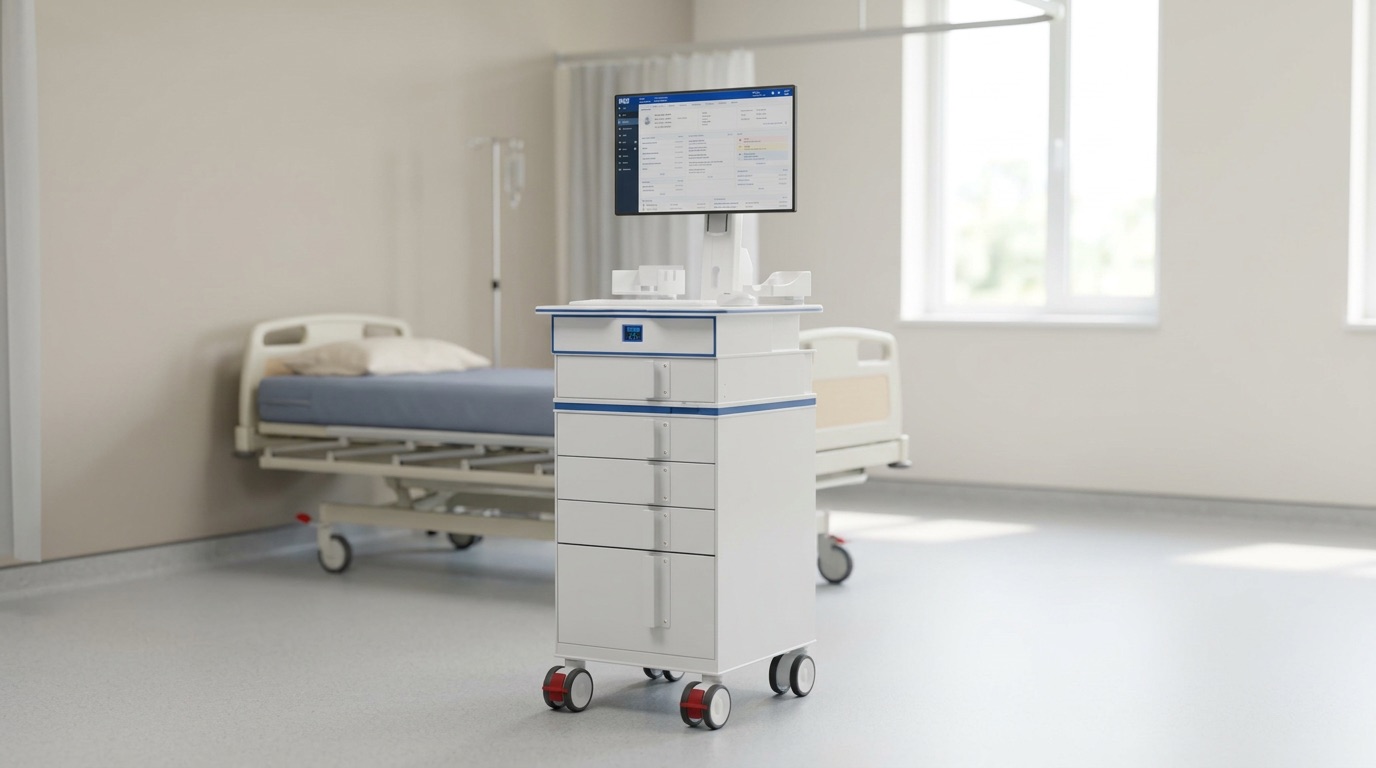
About Kinetic-ID
Kinetic-ID Ltd is a fast-growing Med-Tech company specialising in the design and manufacture of mobile workstations and other powered devices.
Bespoke workstations are built around the realities of your clinical environment, not the other way round. Custom footprints replace existing furniture without adding clutter to crowded bays. Lockable, non-lockable and compact configurations suit every department. Prototyped on site and refined with your staff before manufacture.
