
How to Reduce Deviations in Life Sciences Manufacturing: Why Visibility at the Point of Work Matters

In life sciences manufacturing, deviations rarely catch you off guard in a single dramatic moment. They build quietly, with a parameter drifting slightly off-spec, a batch setup that nobody caught in time, or a compliance check that got delayed because the nearest terminal was on the other side of the facility. By the time QA flags the issue, the batch is already done, and the window to act has already closed.
The same pattern comes up repeatedly across pharma and biotech manufacturers working in cleanroom, fill-finish, and packaging environments: teams are not short on data. They are short on access to that data at the moment it matters.
Reducing deviations is not solely about improving processes or tightening controls. It also requires ensuring that the right information is visible, at the right moment, precisely where the work is happening.
Most Deviations Don’t Start at the Point of Failure. They Start Hours Before It.
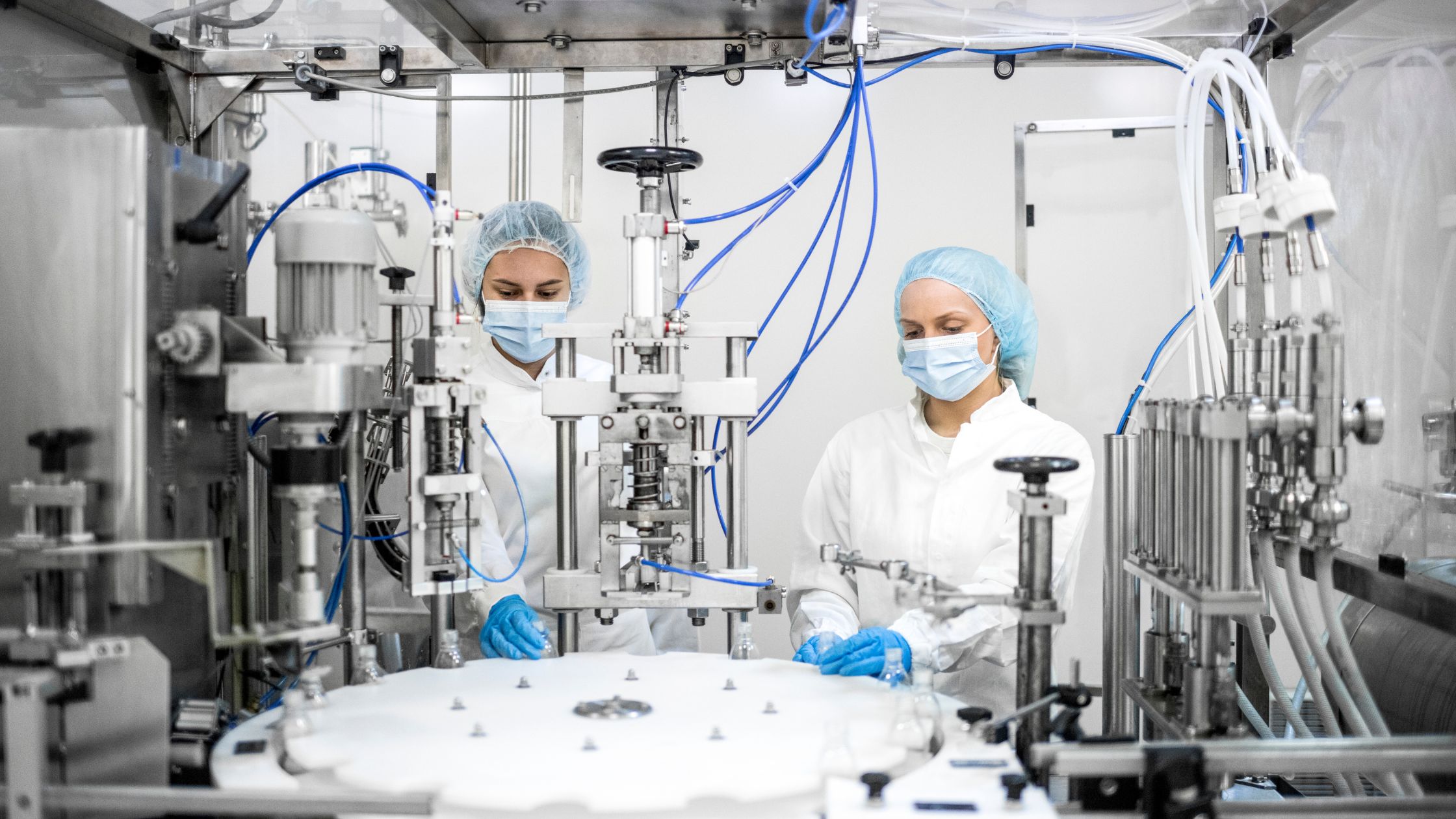
When you walk into a manufacturing facility that is struggling with deviation rates, the problem is rarely what it appears to be on the surface. The deviation log captures events, but it does not always capture the conditions that allowed those events to unfold. What you tend to find instead is a structural timing problem: operators relying on multiple isolated control interfaces, physically moving between HMIs, terminals, and equipment to verify status and ensure compliance, because each system reports alarms, interlocks, and errors independently.
This movement creates blind spots. When personnel must leave an asset to check a parameter, there is a window during which issues can go unnoticed. And when a deviation is not caught immediately, the consequences compound quickly: errors propagate downstream into subsequent steps, product quality degrades in ways that may be irreversible, entire batches are lost, investigation and correction costs rise, and regulatory risk increases — particularly in GMP or safety-critical environments.
A single missed alarm can trigger a cascade of failures, and by the time the deviation becomes visible, the damage is already done. That is why the first thing worth examining in any facility with high deviation rates is not the process documentation or the training records, but the physical relationship between people and the systems they depend on.
The Real Root Cause Is Not Process. It Is Timing.
Most deviation reduction programmes focus on the right things: process improvement, training, and tighter documentation controls. Those elements matter, and they contribute meaningfully to compliance outcomes. But they do not address the underlying timing problem, and timing is where most deviations actually originate.
The table below illustrates how common floor-level scenarios translate into deviation risk when visibility is low:
None of these are complex failures, they are timing failures, and timing is directly linked to one question: can your team access the systems they need, from where the work is actually happening?
The IT/OT Gap and What It Looks Like on the Floor
From an automation and systems integration perspective, the gap between OT systems and the people who need to act on them tends to show up in very operational ways. Poor IT/OT integration is something teams feel before they can diagnose it analytically.
Operators become runners rather than controllers, physically walking between HMIs, terminals, and equipment to check alarms, manually verify setpoints or batch steps, and confirm that upstream or downstream stages are ready. The result is wasted time and structurally embedded blind spots where deviations can hide. Data arrives too late to act on, tribal knowledge substitutes for system guidance in ways that are difficult to standardise, and quality and operations teams end up working from different versions of reality because the underlying data is neither integrated nor available in real time.
Poor IT/OT integration does not only inconveniences people but also creates structural vulnerability: higher deviation rates, batch failures, increased downtime, lower throughput, elevated labour costs, and reduced operator morale. The symptoms are operational, but the root cause is architectural.
Data Is Not the Problem. Access Is.
Most manufacturing environments are not lacking data. MES, DCS, SCADA, and LIMS systems generate large volumes of information across production, and the challenge is not whether that data exists, it is whether anyone can get to it while the process is still running.
In facilities that struggle with deviation rates, critical information is still reviewed after the batch is completed, accessed from fixed terminals positioned away from the process, and analysed retrospectively rather than during execution. This creates a gap between when an issue occurs and when it is detected — and when factory floor visibility is low, problems only surface once QA reviews the batch record or, worse, during an inspection readiness activity.
The shift that reduces deviations in practice is moving from finding the issue after it happens to seeing the issue while it is happening. That shift depends on three conditions being met simultaneously.
Real-time visibility at the point of work means operators can see system data while they are interacting with the process, rather than after they have left it. The ability to act immediately means that visibility and action happen in the same moment, because visibility without the ability to verify, adjust, and document does not reduce risk on its own. And systems that are part of the workflow, rather than separate checkpoints, mean that MES, EBR, and LIMS feel like where you already are, not somewhere you have to go.
Why Infrastructure Is the Layer Everyone Skips
This is where most conversations about deviation reduction go wrong. Visibility gets treated as a software problem, and teams invest in better MES platforms, more dashboards, and tighter integrations, only to find that deviation rates do not move the way they expected. The reason is almost always infrastructure.
Even the most capable digital platform cannot reduce deviations if it is not accessible where the process is happening. When operators have to leave the process area to check data, the delay is built into the workflow before anything else begins. When system access depends on shared terminals or fixed workstations that are not positioned near the asset, friction becomes the default, not the exception.
When done well, the infrastructure supporting point-of-work visibility should feel invisible to operators and highly structured behind the scenes. The goal is not to give people access to all data everywhere, but to deliver the right data, in the right context, to the right person, at the right moment. Complicated dashboards that require interpretation and evaluation are not good practice in GMP environments. What works is simpler: standard device templates, defined state models, and clear ownership of data governance.
In practical terms, improving point-of-work access in a GMP environment means deploying mobile workstations that move with the workflow while maintaining cleanroom compliance, fixed access points positioned at the asset rather than across the room, reliable power systems that support continuous operation across shifts, and integration with existing validated IT infrastructure without disrupting qualification status.
This is where the ID-Flow range sits, not as hardware for its own sake, but as a visibility layer that puts MES, EBR, DCS, LIMS, and SOPs in the hands of the operator at the point where decisions need to be made. The ID-Flow 5 works well in Grade C/D environments with MES-heavy workflows. The ID-Flow 6 is built for stricter hygiene zones with a full stainless steel enclosure. The ID-Flow 9 is designed for Grade B and high-compliance spaces where fixed-height and DC power are required. Each model is built around the same principle: the data needs to be where the person is, not somewhere they have to go.
What Good Infrastructure Looks Like
When OT data is properly connected to the people on the floor, the infrastructure becomes the least interesting part of the conversation. That is the point. Good integration means a single, governed access layer to OT data — read-optimised for HMI views, mobile interfaces, reports, and analytics — with clear separation between control and monitoring functions. It means the right data is surfaced, not all of it.
The most common blockers when manufacturers try to close this gap are consistent across pharma, MedTech, and other regulated industries. Teams confuse data availability with data usefulness. When data is non-contextualised, not in real-time, and not structured to support decision-making, it does not reduce deviation risk; it adds cognitive load. The questions worth asking before deployment are: who is the data for, are you pulling from the correct sources, do the combined data streams actually support decision-making, and is the expectation that operators should go looking for information rather than having it surfaced to them automatically?
When the integration is done well, operators can correct drift before quality loss occurs, shift-to-shift variability reduces significantly, investigation efforts drop, yield loss decreases, and, perhaps most importantly, operators trust the system because it matches their experience of reality on the floor.
What This Looks Like in Practice
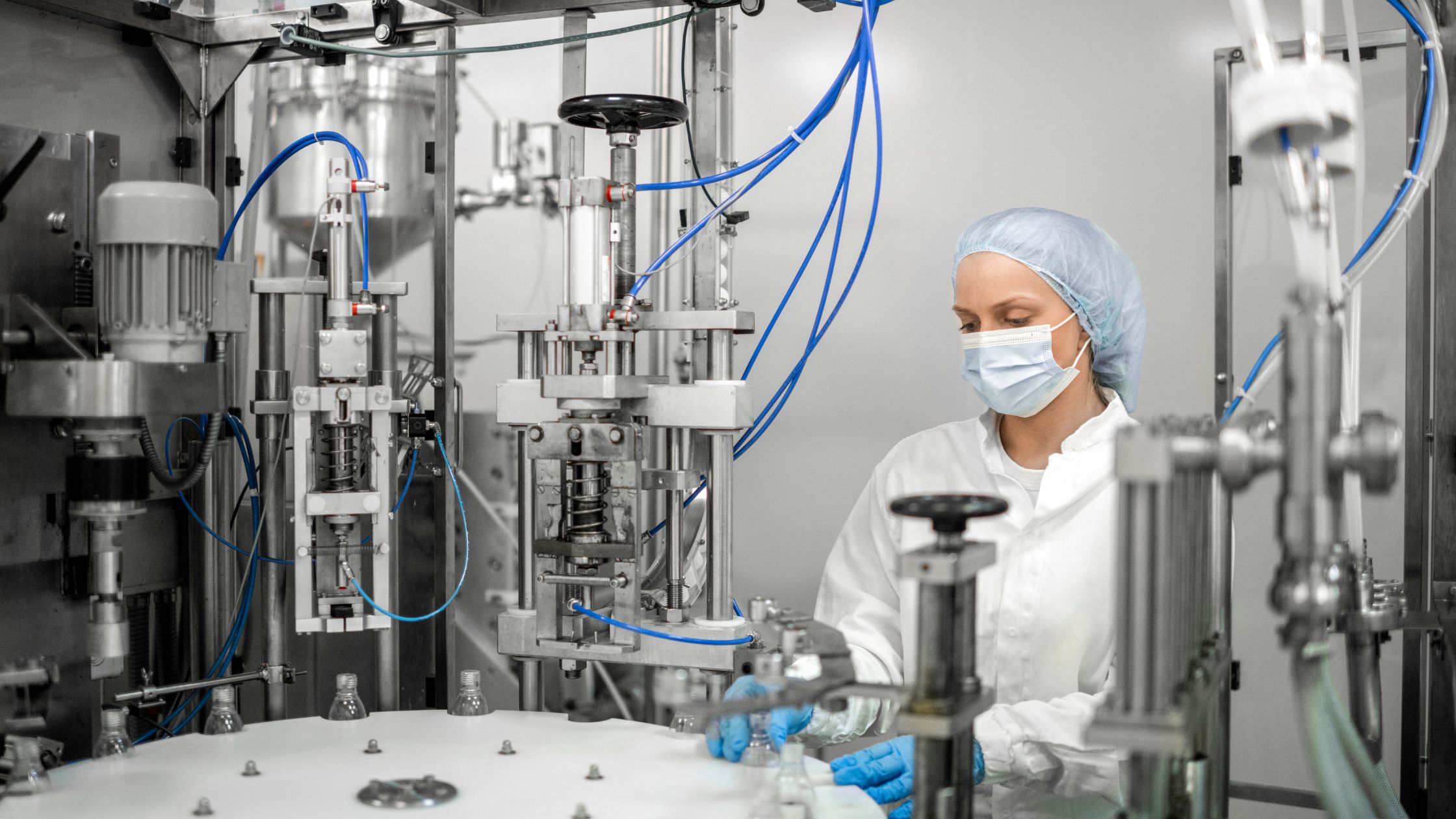
Take a fill-finish environment as an example. An operator notices something slightly off with a parameter mid-cycle. With a fixed terminal setup, they face a choice: leave the process area to check, disrupting gowning protocols and their workflow, or make a judgment call from memory and document it retrospectively. Neither option is satisfactory from a compliance standpoint.
With a mobile workstation positioned at the point of work, the same operator checks the relevant MES screen without leaving the asset, verifies the observation against the batch record, and documents the action immediately. The issue is caught and resolved within the same production cycle, rather than surfacing as a deviation during batch review.
Once a facility reaches this level of integration, where operators trust the data because it reflects what they can see and verify in front of them, the downstream effects are measurable. Shift-to-shift variability narrows, investigations become shorter and more straightforward, and the audit trail reflects what actually happened rather than what someone remembered hours later.
What Compliance and Quality Teams Should Be Asking
For QA and compliance leads, the questions worth asking are not primarily about software capability. They are about where visibility breaks down in your specific environment:
Regulatory expectations have also shifted. The FDA, MHRA, and other bodies are increasingly aligned with digital traceability, and the expectation is not only that data exists, but that it is being actively used during production. Real-time access supports more accurate documentation, stronger audit trails, and earlier deviation detection. It also reduces reliance on the manual workarounds that tend to surface as findings.
For IT and Automation Teams: The Validation Question
One aspect of deviation reduction that does not receive enough attention is where IT and automation sit in the decision-making process. Deploying mobile workstations in cleanroom environments is not a simple infrastructure upgrade. It is a cross-functional validation and risk management exercise, and the teams that handle it well are the ones that treat it that way from the beginning.
Before anyone mounts a mobile access point in a GMP zone, IT and automation need to align on validation boundaries, data integrity expectations, and how mobility changes the control system risk profile. The most common underestimation is how much the infrastructure itself becomes part of the validated system once it touches GMP-relevant data or workflows. Anything that can influence GMP-relevant data, decisions, or control actions must be treated as part of the validated chain, even if it is described as “just infrastructure.”
If a mobile device can acknowledge alarms, execute batch steps, or display real-time parameters, the infrastructure enabling that access becomes part of the validated system. That has direct implications for how it is qualified, maintained, and changed over time.
The conversations that need to happen before deployment cover several non-negotiable areas. Data integrity: how will mobile devices ensure that records are attributable, legible, contemporaneous, and accurate? How are audit trails captured when actions are taken from a mobile device? What happens if the device loses connectivity mid-action? Network reliability and determinism: how is latency managed, how does the device handle roaming between access points, and how are cybersecurity and signal integrity maintained in environments with potential interference?
Most failures in mobile GMP deployments happen because teams underestimate the validation and risk assessment required. The facilities where this works well are the ones where IT, OT, manufacturing operations, and QA are solving the problem together — not each owning a separate piece of it in isolation.
Reducing Deviations Is an Infrastructure Decision, Not Just a Process One
Most deviation reduction strategies focus on the right things — better processes, stronger training, tighter controls. But they often miss the physical layer: where people are when they need information, and whether they can get to it without breaking their workflow in the process.
When operators can verify parameters during execution, confirm batch details without leaving the asset, and document actions as they happen, deviation risk drops, not because the process changed, but because the timing changed. That is what point-of-work visibility does in practice. It turns the gap between an event and its detection into something that can be closed in real time, before it becomes part of the deviation record.
Improving Visibility to Reduce Deviations
If you are reviewing where deviations originate across your manufacturing processes, Kinetic-ID can help assess how point-of-work access and infrastructure design impact detection, response, and compliance.
Speak with a solutions consultant
